Showing posts with label travel. Show all posts

Monday, July 15, 2019

Travel?

Recently we took a car trip that required 2 days of driving each way.  (Why did we drive?  We have a dog who is part of our family.)

What did we learn?

One of our daughters drove one way with us and helped with the driving.  I no longer do highway driving, which puts the burden on my husband - it takes WAY too much executive functioning/multi-tasking/keeping track of many critical things at the same time.  I could have managed the quiet back roads early in the morning

  • We will start early and get off the road before the afternoon rush hour.

The dog sleeps a lot, but I can't safely walk him because he pulls, which puts extra stress on my husband.  The dog is finding the trips wearing, as he gets older.

  • Since the dog is elderly, and gets worn out by long trips, we aren't scheduling any more driving trips in the near future.

I used my phone to schedule medications, and didn't miss a single dose, but exercise was much harder.  I remembered to do my physical therapy and Qigong, but forgot the cardio, as well as swallowing/voice exercises.  A vacation visit is so shapeless, delightedly so, but that means the usual cues are missing.

  • I need to use my phone to schedule exercise so I remember to do it, the way I schedule medications..  There is also seated cardio that I can do in the car (lots of Youtube videos)

I wore a diaper just in case I didn't quite make it to the bathrooms on time - since when I gotta go, I gotta go right now, and pads might not be quite enough.  As it happens, I didn't need it, but I was glad to have it.

  • I'm going to continue to using the diapers.  Amazingly, these fit fine under my clothes.

We plan exactly what to bring,  complete with a spreadsheet for planning.  This has meant less lugging stuff into the motel room for my husband, but it did take thought, conversation, and trial-and-error.

  • We try to talk about what's working - and not - throughout the trip.
Travelling - and sitting - encourages, um, constipation.  We both get really tired (even though I'm just sitting). 
  • Build in time to use the bathroom.  Less Rush! Rush!
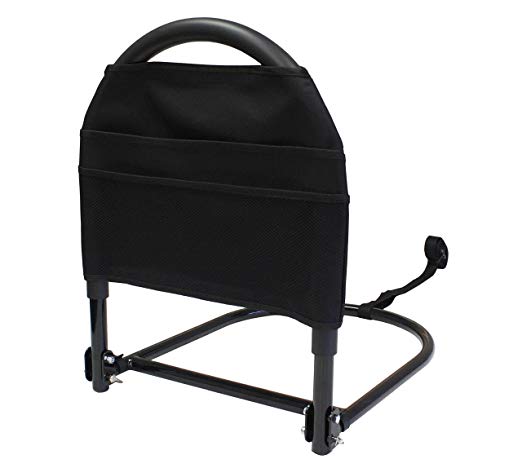
We thought about how flying might bring different issues.  For example, it's easy to throw my bed rail in the car, but it's unwieldy for a plane (but it helps me get into and out of bed, as well as keeping me from falling out).  Questions on a support forum resulted in many helpful responses including:
  • Portable bedrail, check it, send it ahead to the hotel, and the TSA's information about getting through security checkpoints while disabled.  The community rises to the occasion again.
Long trips may not be for us any more, but there are ways to make them more bearable.

Images from Pixabay and Amazon.


Monday, May 6, 2019

Questions to ask about a Clinical Trial

I came across this presentation recently about questions you should ask before participating in a clinical trial.  They're great questions, so I wanted to share them. I had some of these questions, others, too, and there were still others I had not thought of.  You probably have other questions, too.

Remember that a clinical trial involves risk - at the very least, the proposed treatment might not work.  But it could also cause harm, and even, though rarely, death.  So ask!

First, some things to think about up front:
  • How will this fit into my schedule?
  • What am I planning or hoping to get out of participating? (Find a better treatment for me, help all pwp, etc.)
  • What matters to me the most about participating in this trial?
  • What does my own doctor think about how this might fit into my care plan/safety/etc? 
Basics about the study
  • What is the study trying to accomplish?
  • Who, exactly, is conducting this research?  (For example, is it being done for a drug company?)
  • What have these researchers (and others) found out about this treatment?
  • Have the results of previous research been published?  (If not, why not?)
  • What risks are there, and what are the possible benefits?
  • Is there a placebo?  (The equivalent of a sugar pill, a placebo helps determine what reaction is due to "placebo effect" - hopefulness that this will work vs. how well it really works.)  If I receive a placebo, will I have the opportunity to receive the real treatment later on?  How does a placebo work in the case of a surgical study?
What will the experience be like?
  • How long will the study go, and how often will I be needed?
  • What form will the treatment take?   (pill, shot, surgery, specific exercise...)
  • What other tests are involved?  Do these tests involve risk?  Pain?  Who will conduct these tests?  (For example, if a spinal tap is being done, what are the risks from this test, and how much training/experience does the person have who will conduct the test?)
  • How will my privacy (health, personal information, test results, etc.) be protected?
  • What will happen at each visit?
  • If I decide to leave the study early, what needs to happen? (for example: slow reduction of drug, surgical removal of hardware)
  • What happens if my condition gets worse, or I am injured/made sick because of the trial?  Who will pay for my care?
  • What if I have an adverse reaction when I'm away on vacation?  Who should I see for care?  If I need an emergency room visit, will I be reimbursed for the cost?
Costs I might have to bear
  • Will any travel costs be paid for, and if so are there limits on distance?
  • How about taxis or meals?
  • Is the location where the study takes place in my insurance network?  If not, will the study pay costs for tests that insurance would usually cover?
  • If there are any lab tests that help the study but are not "medically necessary" who will pay for these tests?
  • Is there a copay cost to see a specialist/specialists that I will need to pay?
  • If my insurance is needed to pay for some costs, who will submit the costs to insurance?
What happens after the study 
  • What happens after the study?
  • Is there follow-up care needed?  Who will provide that, and who will pay for this care?
  • Will I have access to test results, and to whether I received placebo or active therapy?  When will this information be available?  
  • Is there a way for me to continue to take the drug/use the device after the trial is over, if it helps me?  Who will I need to speak to?
Don't stop with these questions.  Ask others (like, if I need to come after school hours, will you reimburse me for babysitting costs?)

Many of these questions come from a presentation by Nancy Ryerson of Antidote, and Jill McNair of the Center for Information and Study on Clinical Research Participation.  This presentation is on the Antidote website, along with some other very useful webinar recordings and other resources about clinical trials. For basic information on clinical trials see this post; if you want to participate but don't want to expose yourself to new treatments, see this post.  Remember:  you're the volunteer, so you decide.

Just came across this, written by Simon Stott (The Science of Parkinsons blog) about some rules to follow once you're in a clinical trial.

Image from Pixabay.


Great tools to use during the Pandemic

Some organizations have stepped up for pwp who have lost socialization, and usually exercise programs and support groups.  Even for those ex...