If you live in the US, there is a terrific website with current information about Exercise and about Support Groups for each state. Parkinson & Movement Disorder Alliance has taken on the work of identifying each PD-specific Exercise group and Support group. They even have information about local, regional, and national organizations. Try to Google this yourself, and you will appreciate just how much work this is. Exercise groups will help improve your symptoms and may even slow progression - and can often become a support group, as well. Support groups provide a place to ask questions, discover local resources, and get support - for the pwp and for the care-partner/family.
https://www.pmdalliance.org/resources/
If you live outside the US, to find Parkinson's specific exercise, Google
Parkinson's exercise your-geographical-area
To find Parkinson's specific support groups, Google
Parkinson's support your-geographical-area
For a list of national/international Parkinson's organizations by world geographical area:
https://www.worldpdcoalition.org/page/Partners
A really great book for pwp and their families/friends is Every Victory Counts. Its focus is on how one can live well with PD. There are contributions by pwp, families and care-partners, physical therapists, doctors, and more. Included is information about diet, exercise, speech therapy, how to talk to your doctor, useful checklists, and much more. Best of all, it's free and downloadable online so that it's instantly available; a print version is often available, too. I have both. Kudos to the Davis Phinney Foundation for making this available and updating it regularly.
https://www.davisphinneyfoundation.org/resources/every-victory-counts-2017/
Other information that may help:
How to find info on research http://parkiesupport.blogspot.com/2019/09/where-to-find-latest-on-parkinsons.html
Who are all these PD organizations? http://parkiesupport.blogspot.com/2018/01/who-heck-are-all-these-organizations.html
What to know when first diagnosed http://parkiesupport.blogspot.com/2019/05/what-i-wish-i-had-known-being-first.html
Showing posts with label exercise. Show all posts
Monday, January 20, 2020
Monday, January 13, 2020
Exercise that's different - the Theracycle
One of the earliest discoveries about PD was accidental. A pwp rode a tandem bicycle with a doctor at Ragbrai, an annual cross-Iowa cycling event. She was pedaling faster than she would have, because of her partner - and by the end of the week, many of her PD symptoms had improved markedly. That experience grew into a whole series of experiments that demonstrated that when rats - and people - have to exercise faster than they ordinarily would, their PD symptoms improve (in the rats' case this was PD-like symptoms).
That Ragbrai experience on the tandem bike was forced exercise.
The Theracycle is reminiscent of a stationery bicycle, with important differences - it doesn't have a bike seat (and that's good, for there is very little comfortable about a bike seat), and it has a motor that enables you to pedal faster than you'd choose to pedal on your own. You could use it as a stationery bike, but you can have it assist you to go faster - that's the forced exercise.
There are cheaper versions of the Theracycle, but they lack a critical safety feature - do you want the bike to keep pedaling when your feet are attached to the pedals - if you fall off the bike? Me, neither. The Theracycle has a "deadman" switch similar to treadmills; you pin it to your clothing so if you fall the cord pulls a magnet off its target and the machine stops.
We purchased a Theracycle used, almost new, for under $2,000, less than half the cost of new (which would be $4,800 for this model.) My husband found it on Craigslist.
I gotta warn you - like a treadmill, it's boring. My husband, bless him, hooked up a tablet clamped to the right of the display, so I can watch Youtube.
For awhile I used the forced exercise aspect of the Theracycle, but it is a bit too energetic for my additional diagnosis (myelitis, which is similar to MS; see previous blog). Now, I'm only allowed to do moderate exercise, not vigorous at all - and when I do vigorous exercise now I end of stiff (unable to move stiff), exhausted for 24-48 hours, and sorry. This is frustrating since I became a real exercise nut before.
But I can stay on the Theracycle for long periods if I set the speed lower. Possibly I can build up to a faster speed at some time in the future. For now, I can work out at a lower speed but for quite awhile; typically I walk on the treadmill for 15 or 20 minutes, then use the Theracycle for 20-40 minutes more. If I'm tired, I skip the treadmill and use just the Theracycle. Even at the slower rate my legs are stronger.
So the Theracycle has been a boon for both conditions.
Image from https://www.theracycle.com/forced-exercise-bikes-for-pd/theracycle-200/
That Ragbrai experience on the tandem bike was forced exercise.
The Theracycle is reminiscent of a stationery bicycle, with important differences - it doesn't have a bike seat (and that's good, for there is very little comfortable about a bike seat), and it has a motor that enables you to pedal faster than you'd choose to pedal on your own. You could use it as a stationery bike, but you can have it assist you to go faster - that's the forced exercise.
There are cheaper versions of the Theracycle, but they lack a critical safety feature - do you want the bike to keep pedaling when your feet are attached to the pedals - if you fall off the bike? Me, neither. The Theracycle has a "deadman" switch similar to treadmills; you pin it to your clothing so if you fall the cord pulls a magnet off its target and the machine stops.
We purchased a Theracycle used, almost new, for under $2,000, less than half the cost of new (which would be $4,800 for this model.) My husband found it on Craigslist.
I gotta warn you - like a treadmill, it's boring. My husband, bless him, hooked up a tablet clamped to the right of the display, so I can watch Youtube.
For awhile I used the forced exercise aspect of the Theracycle, but it is a bit too energetic for my additional diagnosis (myelitis, which is similar to MS; see previous blog). Now, I'm only allowed to do moderate exercise, not vigorous at all - and when I do vigorous exercise now I end of stiff (unable to move stiff), exhausted for 24-48 hours, and sorry. This is frustrating since I became a real exercise nut before.
But I can stay on the Theracycle for long periods if I set the speed lower. Possibly I can build up to a faster speed at some time in the future. For now, I can work out at a lower speed but for quite awhile; typically I walk on the treadmill for 15 or 20 minutes, then use the Theracycle for 20-40 minutes more. If I'm tired, I skip the treadmill and use just the Theracycle. Even at the slower rate my legs are stronger.
So the Theracycle has been a boon for both conditions.
Image from https://www.theracycle.com/forced-exercise-bikes-for-pd/theracycle-200/
Monday, August 5, 2019
Dealing with less - less mobility, less independence
I'm chafing. I fell about two weeks ago, ending up briefly in the ER. No permanent physical damage, but my confidence is shot.
I can't pretend that the cane is okay any more; probably I was deluding myself. Yeah, if I could be assured that I would always pay 100% attention, 100% of the time. Yeah, right.
Fortunately, I have a used rollator that works okay, (and I know how to use it) though it doesn't fold, so isn't great for going anywhere in the car. I also purchased a new rollator, which does fold, but it weighs a bit more, and I find that I'm so worried about falling when I take out/put back the rollator that I want to hold onto the car with one hand, which really means I don't have both hands free to lift the rollator into the back seat or the trunk. Which means that I effectively can't drive - independence, I hardly knew ye. Overnight. Not ready to stop driving yet.
But I'm walking so tentatively now. The fall was caused by momentary inattention, not symptom progression. But I hold onto everything when outside, especially my husband. And this is made harder by having my left hand in a splint. But today I took a shower unaided, and got out of the shower unaided (yahoo!) Big step forwards.
I've done all the balance challenge exercises that my PT used to challenge me - and I can do them. Except for the instability pads/stepping stones - so I'm buying those. It's not my ability. It's my confidence that s**ks.
I haven't been driving - partly because of the splint, and partly because I know I need the rollator (and even if I could use the cane, I use the cane in my left hand, the hand with the splint). This has meant an overnight loss of independence which has made me grumpy. My husband is happy to drive me, but I'm not ready to be that dependent overnight. This means I need to practice putting the rollator in the car and taking it out. I know I can do this mentally, but my body isn't quite sure yet.
Update: starting to put rollator into back seat, then take it out again. Yay! Even drove a little. Baby steps, but steps!
I can't pretend that the cane is okay any more; probably I was deluding myself. Yeah, if I could be assured that I would always pay 100% attention, 100% of the time. Yeah, right.
Fortunately, I have a used rollator that works okay, (and I know how to use it) though it doesn't fold, so isn't great for going anywhere in the car. I also purchased a new rollator, which does fold, but it weighs a bit more, and I find that I'm so worried about falling when I take out/put back the rollator that I want to hold onto the car with one hand, which really means I don't have both hands free to lift the rollator into the back seat or the trunk. Which means that I effectively can't drive - independence, I hardly knew ye. Overnight. Not ready to stop driving yet.
But I'm walking so tentatively now. The fall was caused by momentary inattention, not symptom progression. But I hold onto everything when outside, especially my husband. And this is made harder by having my left hand in a splint. But today I took a shower unaided, and got out of the shower unaided (yahoo!) Big step forwards.
I've done all the balance challenge exercises that my PT used to challenge me - and I can do them. Except for the instability pads/stepping stones - so I'm buying those. It's not my ability. It's my confidence that s**ks.
I haven't been driving - partly because of the splint, and partly because I know I need the rollator (and even if I could use the cane, I use the cane in my left hand, the hand with the splint). This has meant an overnight loss of independence which has made me grumpy. My husband is happy to drive me, but I'm not ready to be that dependent overnight. This means I need to practice putting the rollator in the car and taking it out. I know I can do this mentally, but my body isn't quite sure yet.
Update: starting to put rollator into back seat, then take it out again. Yay! Even drove a little. Baby steps, but steps!
Monday, July 15, 2019
Travel?
Recently we took a car trip that required 2 days of driving each way. (Why did we drive? We have a dog who is part of our family.)
What did we learn?
One of our daughters drove one way with us and helped with the driving. I no longer do highway driving, which puts the burden on my husband - it takes WAY too much executive functioning/multi-tasking/keeping track of many critical things at the same time. I could have managed the quiet back roads early in the morning
The dog sleeps a lot, but I can't safely walk him because he pulls, which puts extra stress on my husband. The dog is finding the trips wearing, as he gets older.
I used my phone to schedule medications, and didn't miss a single dose, but exercise was much harder. I remembered to do my physical therapy and Qigong, but forgot the cardio, as well as swallowing/voice exercises. A vacation visit is so shapeless, delightedly so, but that means the usual cues are missing.
I wore a diaper just in case I didn't quite make it to the bathrooms on time - since when I gotta go, I gotta go right now, and pads might not be quite enough. As it happens, I didn't need it, but I was glad to have it.
We plan exactly what to bring, complete with a spreadsheet for planning. This has meant less lugging stuff into the motel room for my husband, but it did take thought, conversation, and trial-and-error.
Images from Pixabay and Amazon.
What did we learn?
One of our daughters drove one way with us and helped with the driving. I no longer do highway driving, which puts the burden on my husband - it takes WAY too much executive functioning/multi-tasking/keeping track of many critical things at the same time. I could have managed the quiet back roads early in the morning
- We will start early and get off the road before the afternoon rush hour.
The dog sleeps a lot, but I can't safely walk him because he pulls, which puts extra stress on my husband. The dog is finding the trips wearing, as he gets older.
- Since the dog is elderly, and gets worn out by long trips, we aren't scheduling any more driving trips in the near future.
I used my phone to schedule medications, and didn't miss a single dose, but exercise was much harder. I remembered to do my physical therapy and Qigong, but forgot the cardio, as well as swallowing/voice exercises. A vacation visit is so shapeless, delightedly so, but that means the usual cues are missing.
- I need to use my phone to schedule exercise so I remember to do it, the way I schedule medications.. There is also seated cardio that I can do in the car (lots of Youtube videos)
I wore a diaper just in case I didn't quite make it to the bathrooms on time - since when I gotta go, I gotta go right now, and pads might not be quite enough. As it happens, I didn't need it, but I was glad to have it.
- I'm going to continue to using the diapers. Amazingly, these fit fine under my clothes.
We plan exactly what to bring, complete with a spreadsheet for planning. This has meant less lugging stuff into the motel room for my husband, but it did take thought, conversation, and trial-and-error.
- We try to talk about what's working - and not - throughout the trip.
Travelling - and sitting - encourages, um, constipation. We both get really tired (even though I'm just sitting).
- Build in time to use the bathroom. Less Rush! Rush!
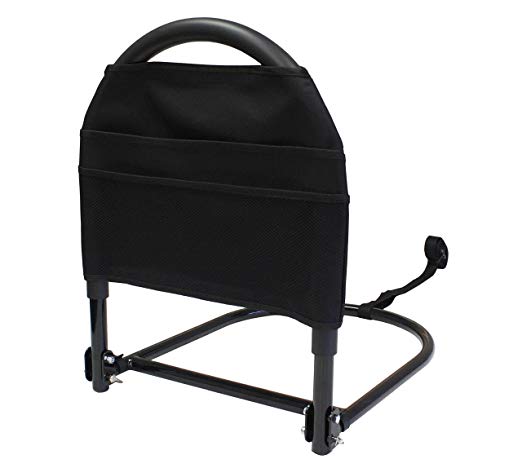
We thought about how flying might bring different issues. For example, it's easy to throw my bed rail in the car, but it's unwieldy for a plane (but it helps me get into and out of bed, as well as keeping me from falling out). Questions on a support forum resulted in many helpful responses including:
- Portable bedrail, check it, send it ahead to the hotel, and the TSA's information about getting through security checkpoints while disabled. The community rises to the occasion again.
Long trips may not be for us any more, but there are ways to make them more bearable.
Images from Pixabay and Amazon.
Saturday, June 15, 2019
How to find local support, exercise, speech therapists, physical therapists, and clinical trials
Here is where doctors, patients, and care partners can find local resources easily and quickly:
To find a local PD support group, use Google. Enter support Parkinson's your-state-name (or your city name) You can also try at PMD Alliance, which is working to build a US-wide list: https://www.pmdalliance.org/resources/support-groups/)
To find local exercise PD .exercise groups, use Google. Enter exercise Parkinson's your-state-name.
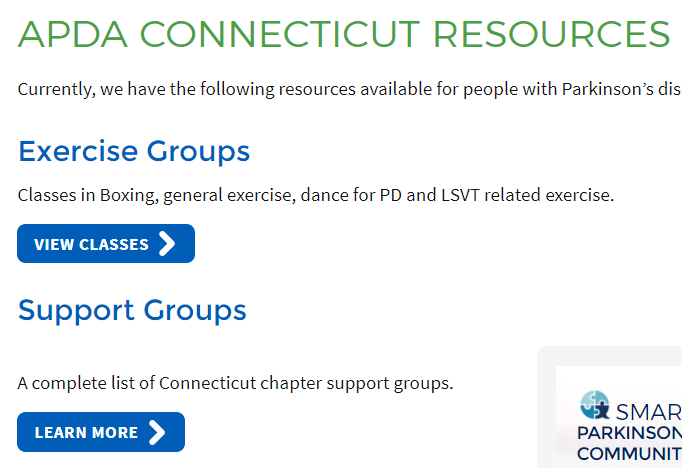
If you live in Connecticut, information about support and exercise has already been compiled.
To find local physical therapists who have experience working with PD, click on the APTA website and enter first your zipcode, and then select Neurological.
To find local speech therapists who have experience working with PD, you can select people based on the program they have been trained in:
Finally, if you would like to find Clinical Trials in your local area, use the Clinical Trials website.
This is the basic search screen.
Here's an example of adding PD, "recruiting", your location, and how far you'd be willing to travel.
(For more information, read this short article.)
Magnifying glass image from Pixabay.
To find a local PD support group, use Google. Enter support Parkinson's your-state-name (or your city name) You can also try at PMD Alliance, which is working to build a US-wide list: https://www.pmdalliance.org/resources/support-groups/)
To find local exercise PD .exercise groups, use Google. Enter exercise Parkinson's your-state-name.
If you live in Connecticut, information about support and exercise has already been compiled.
To find local physical therapists who have experience working with PD, click on the APTA website and enter first your zipcode, and then select Neurological.
To find local speech therapists who have experience working with PD, you can select people based on the program they have been trained in:
Finally, if you would like to find Clinical Trials in your local area, use the Clinical Trials website.
This is the basic search screen.
Here's an example of adding PD, "recruiting", your location, and how far you'd be willing to travel.
(For more information, read this short article.)
Magnifying glass image from Pixabay.
Friday, May 3, 2019
What I wish I had known... being first diagnosed with PD
It was December 20, 2016. It was like a bomb went off close by, so I couldn't hear anything for awhile. My neurologist had made sure it wasn't MS/stroke/Lyme/vitamin deficiency and a host of other things that look like Parkinson's, but aren't. I was pretty sure he was going to say I had PD - after all, my mom and her brother both had it, and I knew something was very wrong.
But hearing the diagnosis confirmed... I didn't hear anything for awhile. Fortunately, my husband and daughter were both there to listen.
I read a lot then, but not everything soaked in, because in the background my mind was shouting, OMG OMG OMG OMG OMG...
What I wish I had known immediately, because it would have helped me focus on living (and might have helped my family, too):
Exercise is critical - not only will it help you feel better, but if vigorous enough, it seems to slow progression and improve symptoms. Fortunately, I already had an exercise habit at dx (diagnosis). For more.
Find other pwp. They provide support, they understand, and they have resources. Support group, online forums, PD exercise group - all places to find your new peers. Set aside your assumptions about age, or gender. You have a lot in common.
Watch out for snake oil as well as for the over-enthusiastic press. There are people who want to make a buck out of your worry. See here and here and here and here and here. And the press will report that there is a cure - but it turns out the hopeful results were in ... mice. It's important to find valid sources for information - talk show hosts, internet advertisements, and your brother-in-law's cousin's buddy are not it. I heartily recommend The Science of Parkinson's.
Alternative / complementary medicine has not been found to cure PD, but it can help make you more comfortable. So. Why. Not?
Find a movement disorder specialist - a neurologist who has extra training and experience with PD. You may see your primary care doctor or your neurologist more often, but a MDS can make a huge difference in diagnosis and care. And be sure you can phone/email/patient portal when you have questions or concerns; getting your medications/dosage right or dealing with an alarming new symptom are not matters to wait for the next appointment in weeks or months. In the US, you can use https://parkinson.org/Living-with-Parkinsons/in-your-area. Or email your location to info@movementdisorders.org.
Be proactive. I am not sorry that I found a good physical therapist who is experienced with PD. Or that I found a good speech therapist. And saw them when my problems were minor. Specialists like these can really help you now - don't wait until you can't get out of a chair, or you can't swallow or your voice is so quiet that nobody can hear you. They can give you exercises that will help you stay on top of symptoms before they get overwhelming. (I remember to do all those exercises by pairing them with an activity - like feeding the dog, or being in the car - that reminds me to do them.)
Read Every Victory Counts, published by the Davis Phinney Foundation. This includes the voices of pwp and their families, addresses complementary therapies, as well as more mainstream therapies. It is focused on living your best life now, and is much more helpful than many of the conventional books written by physicians. Available for free download and sometimes also in paper - free.
Recognize that this may be as hard for your family to grasp as it has been for you. Some will be in denial, telling you that It's all in your head. Sometimes because they don't deal with illness well. Sometimes because this shifts your roles - maybe you were the caregiver and that can't be any more. Some will have opinions about your choices for treatment, forgetting that these are your choices. While they are adjusting, being with other pwp is very helpful. Take family to a support group, too.
Live in the present, but plan for the future. Grab bars in the bathroom. Living will and other legal papers. Investigate the care you might need down the road. My mom needed, eventually, 24 hour care, because she could not stand or walk; not everybody reaches that point, but you may have to deal with it. And don't assume that your spouse can do everything - because even a few hours of physical care can be exhausting to provide.
If you're inclined to participate in finding better therapies, then explore being part of a clinical trial - a scientific study to find out more about possible PD treatments.
Focus on what you CAN do. At the start, PD will remind you of what's hard to do, and you will have this loud volume reminder (OMG I have PD), but if you are wise, in time you just move on to what IS. This is not passive resignation, it is facing reality but living your best life anyway. Michael J. Fox provides a great example of this (but so do many, many others).
This one is hard: accept help. And even harder: ask for help. Getting my cane was a revelation; so many strangers held doors for me. I don't always need it, but that handicapped parking sticker is a Godsend when I do. Exhaustion does not make PD better. People really do like to help.
But hearing the diagnosis confirmed... I didn't hear anything for awhile. Fortunately, my husband and daughter were both there to listen.
I read a lot then, but not everything soaked in, because in the background my mind was shouting, OMG OMG OMG OMG OMG...
What I wish I had known immediately, because it would have helped me focus on living (and might have helped my family, too):
Exercise is critical - not only will it help you feel better, but if vigorous enough, it seems to slow progression and improve symptoms. Fortunately, I already had an exercise habit at dx (diagnosis). For more.
Find other pwp. They provide support, they understand, and they have resources. Support group, online forums, PD exercise group - all places to find your new peers. Set aside your assumptions about age, or gender. You have a lot in common.
Watch out for snake oil as well as for the over-enthusiastic press. There are people who want to make a buck out of your worry. See here and here and here and here and here. And the press will report that there is a cure - but it turns out the hopeful results were in ... mice. It's important to find valid sources for information - talk show hosts, internet advertisements, and your brother-in-law's cousin's buddy are not it. I heartily recommend The Science of Parkinson's.
Alternative / complementary medicine has not been found to cure PD, but it can help make you more comfortable. So. Why. Not?
Find a movement disorder specialist - a neurologist who has extra training and experience with PD. You may see your primary care doctor or your neurologist more often, but a MDS can make a huge difference in diagnosis and care. And be sure you can phone/email/patient portal when you have questions or concerns; getting your medications/dosage right or dealing with an alarming new symptom are not matters to wait for the next appointment in weeks or months. In the US, you can use https://parkinson.org/Living-with-Parkinsons/in-your-area. Or email your location to info@movementdisorders.org.
Be proactive. I am not sorry that I found a good physical therapist who is experienced with PD. Or that I found a good speech therapist. And saw them when my problems were minor. Specialists like these can really help you now - don't wait until you can't get out of a chair, or you can't swallow or your voice is so quiet that nobody can hear you. They can give you exercises that will help you stay on top of symptoms before they get overwhelming. (I remember to do all those exercises by pairing them with an activity - like feeding the dog, or being in the car - that reminds me to do them.)
Read Every Victory Counts, published by the Davis Phinney Foundation. This includes the voices of pwp and their families, addresses complementary therapies, as well as more mainstream therapies. It is focused on living your best life now, and is much more helpful than many of the conventional books written by physicians. Available for free download and sometimes also in paper - free.
Recognize that this may be as hard for your family to grasp as it has been for you. Some will be in denial, telling you that It's all in your head. Sometimes because they don't deal with illness well. Sometimes because this shifts your roles - maybe you were the caregiver and that can't be any more. Some will have opinions about your choices for treatment, forgetting that these are your choices. While they are adjusting, being with other pwp is very helpful. Take family to a support group, too.
Live in the present, but plan for the future. Grab bars in the bathroom. Living will and other legal papers. Investigate the care you might need down the road. My mom needed, eventually, 24 hour care, because she could not stand or walk; not everybody reaches that point, but you may have to deal with it. And don't assume that your spouse can do everything - because even a few hours of physical care can be exhausting to provide.
If you're inclined to participate in finding better therapies, then explore being part of a clinical trial - a scientific study to find out more about possible PD treatments.
Focus on what you CAN do. At the start, PD will remind you of what's hard to do, and you will have this loud volume reminder (OMG I have PD), but if you are wise, in time you just move on to what IS. This is not passive resignation, it is facing reality but living your best life anyway. Michael J. Fox provides a great example of this (but so do many, many others).
This one is hard: accept help. And even harder: ask for help. Getting my cane was a revelation; so many strangers held doors for me. I don't always need it, but that handicapped parking sticker is a Godsend when I do. Exhaustion does not make PD better. People really do like to help.
Monday, July 30, 2018
Technology that encourages exercise
I like to use tools to help me keep track of all that I need to do, and how well I'm doing it, especially when it comes to exercise - because that's medicine. My recent experience is with the Fitbit Alta and with the Apple Watch 1.
I had a Fitbit Alta, which told me to get up once an hour, kept track of my heart rate, and tracked my sleep (different Fitbits provide different features). After 8 months the sleep tracker stopped working right, and the Fitbit often wouldn't remind me to get up. And it was hard to get the Fitbit to show me the time - ever. But the watch part still works, so now my husband has it.
There was a deal on an Apple Watch 1, which cost about the same as the Fitbit, so now I'm wearing the Apple Watch, which is paired with my iPhone (also a recent deal when my Samsung phone started failing). Since the AW only works with an iPhone, I would not have considered the AW before. Gotta say that now that I've figured it out (mostly) the AW has much to recommend it. Besides the heartrate, the AW does actually bug me to get up - but not if I was active during this hour - so it doesn't bug me when it doesn't need to. I also can select from a bunch of types of exercise, called Workouts, and use the AW to keep track of what I did with the calories from exercising, time spent exercising, and number of hours I stood up. Fitbit keeps track of minutes of different kinds of exercise - and sometimes counts the exercise correctly, but often does not. I really got fed up with the inconsistencies - sometimes it would count 35 minutes on the eliptical as exercise, but other times it would ignore it.
Just like with the Fitbit, on the AW I can set goals - not steps, like on the Fitbit, but movement. If I wanted to count steps (I don't), there are apps for that. AW won't let me set goals for time doing exercise, or even for standing every hour. Bafflingly, these are goals to work toward, but I don't set them. More on this in a bit.
One thing that I really like about the AW is that I don't need to do a little dance just to find out what time it is. Often the Fitbit wouldn't tell the time no matter how much I tapped on it or turned my wrist - ahem, a watch that doesn't tell time is of limited value.
Both devices have different formats for the watch face, but the AW shows more information on the clock face that you customize - in my case analog time with a second hand, heart rate, weather, date, next appointment on my calendar (though there are many other choices, including workout, world clock, timer, stopwatch and much more). Also, the AW will alert me when an appointment is approaching - like a Rock Steady Boxing class - so that I remember to go. I've set up appointments with advance reminders for everything on my phone calender - otherwise I just won't remember. Every phone I've ever had has had this kind of calendar app, and I need it now more than ever. Having the reminders on the watch is useful because sometimes the phone is in another room and I don't hear it.
The AW is easier to charge - it charges quickly if you haven't let it become completely drained with a magnet attached to the charger. Easy for when your manual dexterity is suboptimum, which happens when you are a pwp. I had to take the Fitbit off, too, to charge it, but then I had to clamp the charger end onto just the right spot or it would not charge, and a full charge took several hours. On the other hand, you are not using the Fitbit (at least this version) to input information and choices - that's for the Fitbit app on your phone - which I've found both easier for my awkward PD hands, and easier to understand. Also, since the Fitbit isn't as smart, you don't need to charge it as often. The AW needs a charge every day-and-a-half.
This is my first time with the famous Apple-knows-best philosophy. Some things are set in the AW by the user, some in the iPhone... and some can't be set at all. Um, I think I want to be the one to decide the number of minutes that I plan to exercise, not Apple. Considering the hundreds of people asking the internet how they could change their exercise minutes on the AW, I am not alone. Apple does not know best, and if the Apple interface is so wonderful, why do I need to go to third-party videos and articles to find out how the device works, hmmm? (End of rant.)
One thing I've found useful is to keep track of all the different exercises I have to do (balance, cardio, strength, finger dexterity, voice, swallowing...) I have started using the Reminders app (comes on the iPhone) to keep track of all the PD exercise that I do - did I do that today? Oops. Or, not going to do that today because I already did X. Very handy - I just check off what I've done and can see what I meant to do, but didn't. The next day I uncheck everything and start again. This works perfectly on the iPhone, by the way - don't want it on the watch. I'm sure there is an app like this for an Android phone, just didn't think of it when I had one.
I liked the heartbeat information a bit more on the Fitbit - it was easier to see, and it told me how my resting heartrate compares to other women my age. On the other hand, the AW shows me how quickly my heartrate returns to normal after a vigorous workout. I found a free heartrate app that pairs well with the workouts and is way easier to see.
I had to get a separate sleep app for the AW, and it's not as seamless as the Fitbit - the phone needs to be in the room, face down, while I sleep. I've never had the phone in my bedroom unless I needed to be contacted at night so not wild about this. Not quite the same information from this sleep app, but more accurate than the Fitbit has been lately. This brings up another annoying thing about the AW - often it wants the phone to be in your proximity so that the information about a workout will be recorded correctly. I did 50 minutes of PT that shows as a workout, but never made it to the Activity app - which keeps everything together - because the phone was out in the car during the workout. The Fitbit just stores information, then when you hold the phone (yes, it has to be that close) the Fitbit sends information to your phone (Android or iPhone).
In sum? Each has its strengths, but I've found the apps on my phone and watch have helped keep me on the exercise track.
Images from Pixabay
I had a Fitbit Alta, which told me to get up once an hour, kept track of my heart rate, and tracked my sleep (different Fitbits provide different features). After 8 months the sleep tracker stopped working right, and the Fitbit often wouldn't remind me to get up. And it was hard to get the Fitbit to show me the time - ever. But the watch part still works, so now my husband has it.
There was a deal on an Apple Watch 1, which cost about the same as the Fitbit, so now I'm wearing the Apple Watch, which is paired with my iPhone (also a recent deal when my Samsung phone started failing). Since the AW only works with an iPhone, I would not have considered the AW before. Gotta say that now that I've figured it out (mostly) the AW has much to recommend it. Besides the heartrate, the AW does actually bug me to get up - but not if I was active during this hour - so it doesn't bug me when it doesn't need to. I also can select from a bunch of types of exercise, called Workouts, and use the AW to keep track of what I did with the calories from exercising, time spent exercising, and number of hours I stood up. Fitbit keeps track of minutes of different kinds of exercise - and sometimes counts the exercise correctly, but often does not. I really got fed up with the inconsistencies - sometimes it would count 35 minutes on the eliptical as exercise, but other times it would ignore it.
Just like with the Fitbit, on the AW I can set goals - not steps, like on the Fitbit, but movement. If I wanted to count steps (I don't), there are apps for that. AW won't let me set goals for time doing exercise, or even for standing every hour. Bafflingly, these are goals to work toward, but I don't set them. More on this in a bit.
One thing that I really like about the AW is that I don't need to do a little dance just to find out what time it is. Often the Fitbit wouldn't tell the time no matter how much I tapped on it or turned my wrist - ahem, a watch that doesn't tell time is of limited value.
Both devices have different formats for the watch face, but the AW shows more information on the clock face that you customize - in my case analog time with a second hand, heart rate, weather, date, next appointment on my calendar (though there are many other choices, including workout, world clock, timer, stopwatch and much more). Also, the AW will alert me when an appointment is approaching - like a Rock Steady Boxing class - so that I remember to go. I've set up appointments with advance reminders for everything on my phone calender - otherwise I just won't remember. Every phone I've ever had has had this kind of calendar app, and I need it now more than ever. Having the reminders on the watch is useful because sometimes the phone is in another room and I don't hear it.
The AW is easier to charge - it charges quickly if you haven't let it become completely drained with a magnet attached to the charger. Easy for when your manual dexterity is suboptimum, which happens when you are a pwp. I had to take the Fitbit off, too, to charge it, but then I had to clamp the charger end onto just the right spot or it would not charge, and a full charge took several hours. On the other hand, you are not using the Fitbit (at least this version) to input information and choices - that's for the Fitbit app on your phone - which I've found both easier for my awkward PD hands, and easier to understand. Also, since the Fitbit isn't as smart, you don't need to charge it as often. The AW needs a charge every day-and-a-half.
This is my first time with the famous Apple-knows-best philosophy. Some things are set in the AW by the user, some in the iPhone... and some can't be set at all. Um, I think I want to be the one to decide the number of minutes that I plan to exercise, not Apple. Considering the hundreds of people asking the internet how they could change their exercise minutes on the AW, I am not alone. Apple does not know best, and if the Apple interface is so wonderful, why do I need to go to third-party videos and articles to find out how the device works, hmmm? (End of rant.)
One thing I've found useful is to keep track of all the different exercises I have to do (balance, cardio, strength, finger dexterity, voice, swallowing...) I have started using the Reminders app (comes on the iPhone) to keep track of all the PD exercise that I do - did I do that today? Oops. Or, not going to do that today because I already did X. Very handy - I just check off what I've done and can see what I meant to do, but didn't. The next day I uncheck everything and start again. This works perfectly on the iPhone, by the way - don't want it on the watch. I'm sure there is an app like this for an Android phone, just didn't think of it when I had one.
I liked the heartbeat information a bit more on the Fitbit - it was easier to see, and it told me how my resting heartrate compares to other women my age. On the other hand, the AW shows me how quickly my heartrate returns to normal after a vigorous workout. I found a free heartrate app that pairs well with the workouts and is way easier to see.
I had to get a separate sleep app for the AW, and it's not as seamless as the Fitbit - the phone needs to be in the room, face down, while I sleep. I've never had the phone in my bedroom unless I needed to be contacted at night so not wild about this. Not quite the same information from this sleep app, but more accurate than the Fitbit has been lately. This brings up another annoying thing about the AW - often it wants the phone to be in your proximity so that the information about a workout will be recorded correctly. I did 50 minutes of PT that shows as a workout, but never made it to the Activity app - which keeps everything together - because the phone was out in the car during the workout. The Fitbit just stores information, then when you hold the phone (yes, it has to be that close) the Fitbit sends information to your phone (Android or iPhone).
In sum? Each has its strengths, but I've found the apps on my phone and watch have helped keep me on the exercise track.
Images from Pixabay
Monday, April 16, 2018
My real job - exercise
Since I was the original "couch potato," it's amazing how much I exercise. But once you get into the habit it's hard to quit. Since exercise seems to be neuro-protective and may slow PD progression, this getting into the habit is a win-win.
Typical day:
30 minutes on the treadmill working on stride and gait. I also try to push myself cardio-wise, but since my right foot isn't quite cooperative, I don't try to be too speedy. I've created a channel on Pandora that's mostly the right tempo (originally used it for boxing practice). I can hear if I'm stepping heel-toe and if I start dragging my feet. My wonderful husband set up an old computer and monitor so that I can watch videos (youtube has lots of videos that work with treadmills). I'm always dealing with a little cognitive dissonance - I would not be able to walk down the rim trail on the Grand Canyon which is very bumpy - but the difference between what I see and what I feel forces me to focus, so it's a good thing. Not boring at all, thanks to the videos. My stride is longer and stronger, and I find that I'm leaving my cane places because I forget it!
Unless I have boxing, 30 minutes on the NuStep, an elliptical, but a recumbent elliptical, so it's not hard on your knees. I used this in my old gym and love it. I can see the youtube videos from the NuStep so I'm not bored. I can just use my feet, just use my arms, or use both. This is my serious cardio workout for the day. Pricey but worth every dime.
Voice and swallow exercises 2-3 times a day, usually in the car. Why the car? Because the voice exercises make my dog howl (maybe he thinks I'm in pain).
Leg strengthening exercises like squats that I got from my PT. I do these throughout the day, when I'm waiting for the dog to pee, brushing my teeth, and so on.
Balance that includes some Tai Chi - 3-4 times a week. I have a DVD (Jane Adams - Balance & Strength Exercises for Seniors).
Rock Steady Boxing - 3 times a week. This is exercise, support, friendship, and sweat. Favorite times of the week.
When I stop work in June, I hope to add dance, maybe a Tai Chi class, maybe a water movements class.
NuStep image from Amazon.com.
Typical day:
30 minutes on the treadmill working on stride and gait. I also try to push myself cardio-wise, but since my right foot isn't quite cooperative, I don't try to be too speedy. I've created a channel on Pandora that's mostly the right tempo (originally used it for boxing practice). I can hear if I'm stepping heel-toe and if I start dragging my feet. My wonderful husband set up an old computer and monitor so that I can watch videos (youtube has lots of videos that work with treadmills). I'm always dealing with a little cognitive dissonance - I would not be able to walk down the rim trail on the Grand Canyon which is very bumpy - but the difference between what I see and what I feel forces me to focus, so it's a good thing. Not boring at all, thanks to the videos. My stride is longer and stronger, and I find that I'm leaving my cane places because I forget it!
Unless I have boxing, 30 minutes on the NuStep, an elliptical, but a recumbent elliptical, so it's not hard on your knees. I used this in my old gym and love it. I can see the youtube videos from the NuStep so I'm not bored. I can just use my feet, just use my arms, or use both. This is my serious cardio workout for the day. Pricey but worth every dime.
Voice and swallow exercises 2-3 times a day, usually in the car. Why the car? Because the voice exercises make my dog howl (maybe he thinks I'm in pain).
Leg strengthening exercises like squats that I got from my PT. I do these throughout the day, when I'm waiting for the dog to pee, brushing my teeth, and so on.
Balance that includes some Tai Chi - 3-4 times a week. I have a DVD (Jane Adams - Balance & Strength Exercises for Seniors).
Rock Steady Boxing - 3 times a week. This is exercise, support, friendship, and sweat. Favorite times of the week.
When I stop work in June, I hope to add dance, maybe a Tai Chi class, maybe a water movements class.
NuStep image from Amazon.com.
Monday, April 2, 2018
9zest "free trial"
A warning about the 9Zest app that is supposed to provide
customized exercise routines for pwp (and also for people with MS and
strokes). Nice idea, poor implementation.
There is a free-trial period, but there’s no way to cancel
at the end of the “free trial” unless you email customer service.
Why didn’t I want to keep using the app?
- Not a human voice – a machine voice (circa 1997, not Alexa).
- Poor English in almost every sentence – missing words, especially.
- Garbled directions.
- Do you think marching back and forth for 5 minutes is fun or interesting? How about taking pinches from a piece of clay for 5 minutes, using only thumb and index finger? Me neither. Each exercise lasts between 2 and 5 minutes – with a machine voice that is either constant, interrupting itself, or disappears. There is no music.
- If you have multiple goals, you’ll start seeing the same exercises showing up again. Want to march back and forth for another 5 minutes? In silence, except for occasional notices that you’ve completed 110 seconds… 130 seconds…
- Inaccurate lists of equipment needed – I assemble everything they say I need, only to find that, wait a minute, I need a ring to throw a ball through. What? And a bunch of balls to throw through the ring. Didn’t you tell me that I need one ball?
- Lie down. Stand up. Sit down. Lie down. – no thought has been given to people who might need extra time to get down or get up, never mind keeping all the similar exercises together.
Monday, February 12, 2018
Rock Steady Camaraderie
I really miss my Rock Steady buddies. Home with the flu, I don’t just miss the
exercise (and wonder when I will be able to get back to it). I miss the people. The coaches who work us hard and then work us
hard some more. The volunteers who
encourage us, and help us improve our exercise or boxing technique, and keep us
from falling over.
But most of all the other boxers. We give each other encouragement and moral
support. But we’re more. We’re friends. We understand better even than our care
partners what we’re going through. What
we’ve faced and what we’re facing. We
care about each other. When somebody isn’t
there, they’re missed. Only here would
we be relieved to hear that it’s “only” a back problem, or “only” a knee
problem, and not unexpected progression of PD.
We watch each other get a little better.
We watch each other get a little worse.
We see and participate in struggle, overcoming, persistence, heart.
A special word for the caregivers, who come day after day,
week after week, often because the boxer can’t drive any more, but also for the
support and community. Special people.
I came for the exercise, and I love that (and people who
know me probably still find that astonishing).
But the heart of Rock Steady is the people. The heart.
Dedicated to the boxers, coaches, volunteers, and caregivers
at Rock Steady Boxing, at Squared Circle Studio in Deep River, CT, USA.
Monday, February 5, 2018
Physical Therapy - individualized help
Early on you will need to find a PD-experienced physical therapist. (That’s my personal opinion, but it’s based on my personal experience.)
Are you having problems with stiffness, with balance, with your gait (how you walk), slowness getting into / out of cars, problems turning over in bed? Maybe you think you might need a cane or a rollator (used to be called “walkers” but now they can be used indoors and out, include a brake because they have 3-4 wheels, can be pushed without lifting, support walking at a good clip, and often can be folded for transport; see the image below.) A PT (physical therapist) can help with all of these. While a good exercise program is vital for PD, and you surely want to have that, too, physical therapy is individualized exercise, specific to your individual needs.
Should you wait until your doctor recommends PT? I don’t think so. I asked my doctor at the first followup appointment after my diagnosis if I should see a PT; since I was travelling a considerable distance to see the doctor, he didn’t know any PTs in my area, and asked me to call him with the name of a PT so he could do the formal referral (to make the insurance company happy). The doctor was happy that I was being proactive.
Why do you want a PT with PD experience? PD is way different than an athletic injury or recovering from surgery. You want a person who knows the problems you are likely to have (including the fear of falling that can cause you to fall), and has experience helping you practice strategies that work. PD has its own unique challenges, and you don’t need to be teaching your PT about them (or persuading them that these are real problems!) Update: Here's an easy way to find a PT with PD experience: https://parkiesupport.blogspot.com/2018/08/finding-pd-physical-therapist.html
A good PT can give you an exercise program that addresses your specific problems or deficits, help you choose and then teach you to correctly use a cane/rollator/wheelchair if you need one, and may be able to help you find other specialists when you need them – like an occupational therapist or a speech therapist.
My PT worked with me when I was first diagnosed to help me with walking and using a cane (I was falling and couldn’t walk straight). About 6 months later, I sought her out again when balance had me worried again; after working with her, I was able to walk inside comfortably and rapidly without the cane, and reserve the cane for outdoors and crowds. I also practiced dealing with compromised balance and became more confident in my abilities. This isn’t trivial; if you have balance problems, just worrying about falling makes you more likely to fall. Here are some of the ways that PT can help: http://www.moveforwardpt.com/SymptomsConditionsDetail.aspx?cid=98297eb9-eaa1-452e-9489-b46eedf27e80#HowCanPhysicalTherapistHelp
PT is exercise – it helps keep you flexible, and strengthens your muscles so you can do more. And part of the therapy is exercise; expect to work. I learned not to schedule any other exercise for days when I had PT because I was tuckered out.
So how do you find a good PT? If your doctor is located closer to you the doctor may have somebody in mind. Since many of us travel quite a distance to see the neurologist or movement disorder specialist, the doctor may not know anybody local to you. Why do you want somebody local? Because you may see the PT several times a week for several weeks. Even if you still drive, you want the drive to be short when you go so often.
Ask everybody – I got the same name coupled with an enthusiastic recommendation from the health club I was going to and also from a friend. You can also call PTs in your area and ask what their experience is with PD. Here are some additional suggestions for finding a PT: https://www.fsbpt.org/ThePublic/FindaLicensedPhysicalTherapist.aspx
You also need to ask the PT: Do they accept your insurance? Can they see you at a convenient time for you? Can they see you at a place that works for you – their office or your home.
Besides whether your insurance covers this particular PT or PT practice, recognize that you will usually have a co-pay for each visit; some insurance may also put a limit on number of visits/year. Find out.
The extra cost doesn’t mean don’t do it. PT can bring significant improvements in the quality of your life. PD is a movement disorder, remember?
Remember that your insurance probably wants a referral from your doctor, so call your doctor’s office to find out how to get it; you may just need the name and phone number of the PT you want to work with.
When you first meet with the PT, ask about their expertise with PD. Also, talk about your goal – what are you hoping to accomplish? Sometimes you don’t know, beyond, “I want to feel better/move more easily/fall less.” Ask the PT what’s their goal for you. Also, how long should you be coming? After seeing you move and talking to you, the PT should have a plan with some kind of end point.
Don’t wait until you can’t move. Take control of your life.
Images from Pixabay.com.
Are you having problems with stiffness, with balance, with your gait (how you walk), slowness getting into / out of cars, problems turning over in bed? Maybe you think you might need a cane or a rollator (used to be called “walkers” but now they can be used indoors and out, include a brake because they have 3-4 wheels, can be pushed without lifting, support walking at a good clip, and often can be folded for transport; see the image below.) A PT (physical therapist) can help with all of these. While a good exercise program is vital for PD, and you surely want to have that, too, physical therapy is individualized exercise, specific to your individual needs.
Should you wait until your doctor recommends PT? I don’t think so. I asked my doctor at the first followup appointment after my diagnosis if I should see a PT; since I was travelling a considerable distance to see the doctor, he didn’t know any PTs in my area, and asked me to call him with the name of a PT so he could do the formal referral (to make the insurance company happy). The doctor was happy that I was being proactive.
Why do you want a PT with PD experience? PD is way different than an athletic injury or recovering from surgery. You want a person who knows the problems you are likely to have (including the fear of falling that can cause you to fall), and has experience helping you practice strategies that work. PD has its own unique challenges, and you don’t need to be teaching your PT about them (or persuading them that these are real problems!) Update: Here's an easy way to find a PT with PD experience: https://parkiesupport.blogspot.com/2018/08/finding-pd-physical-therapist.html
A good PT can give you an exercise program that addresses your specific problems or deficits, help you choose and then teach you to correctly use a cane/rollator/wheelchair if you need one, and may be able to help you find other specialists when you need them – like an occupational therapist or a speech therapist.
My PT worked with me when I was first diagnosed to help me with walking and using a cane (I was falling and couldn’t walk straight). About 6 months later, I sought her out again when balance had me worried again; after working with her, I was able to walk inside comfortably and rapidly without the cane, and reserve the cane for outdoors and crowds. I also practiced dealing with compromised balance and became more confident in my abilities. This isn’t trivial; if you have balance problems, just worrying about falling makes you more likely to fall. Here are some of the ways that PT can help: http://www.moveforwardpt.com/SymptomsConditionsDetail.aspx?cid=98297eb9-eaa1-452e-9489-b46eedf27e80#HowCanPhysicalTherapistHelp
PT is exercise – it helps keep you flexible, and strengthens your muscles so you can do more. And part of the therapy is exercise; expect to work. I learned not to schedule any other exercise for days when I had PT because I was tuckered out.
So how do you find a good PT? If your doctor is located closer to you the doctor may have somebody in mind. Since many of us travel quite a distance to see the neurologist or movement disorder specialist, the doctor may not know anybody local to you. Why do you want somebody local? Because you may see the PT several times a week for several weeks. Even if you still drive, you want the drive to be short when you go so often.
Ask everybody – I got the same name coupled with an enthusiastic recommendation from the health club I was going to and also from a friend. You can also call PTs in your area and ask what their experience is with PD. Here are some additional suggestions for finding a PT: https://www.fsbpt.org/ThePublic/FindaLicensedPhysicalTherapist.aspx
You also need to ask the PT: Do they accept your insurance? Can they see you at a convenient time for you? Can they see you at a place that works for you – their office or your home.
Besides whether your insurance covers this particular PT or PT practice, recognize that you will usually have a co-pay for each visit; some insurance may also put a limit on number of visits/year. Find out.
The extra cost doesn’t mean don’t do it. PT can bring significant improvements in the quality of your life. PD is a movement disorder, remember?
Remember that your insurance probably wants a referral from your doctor, so call your doctor’s office to find out how to get it; you may just need the name and phone number of the PT you want to work with.
When you first meet with the PT, ask about their expertise with PD. Also, talk about your goal – what are you hoping to accomplish? Sometimes you don’t know, beyond, “I want to feel better/move more easily/fall less.” Ask the PT what’s their goal for you. Also, how long should you be coming? After seeing you move and talking to you, the PT should have a plan with some kind of end point.
Don’t wait until you can’t move. Take control of your life.
Images from Pixabay.com.
Wednesday, December 20, 2017
Finding Exercise
Everybody
tells you that you need to exercise when you have PD. But which exercise is effective, and who has
a class near me?
In
terms of effectiveness, there was just a
clinical trial on exercise published December 2017! Splitting newly diagnosed PWP (People With Parkinson's) who were not
taking any meds into three groups, they found measurable reduction in
progression of PD symptoms in the group that participated in vigorous exercise
(in this case on a treadmill), there was less improvement in the moderate exercise
group, and none in the no-exercise group. Now, researchers are saying they need to see
which type of exercise is better, if
there is one that stands out.
Meanwhile,
back at the ranch, what should you do?
Check with your doctor (in fact, many programs need a doctor’s
signature), then look into programs like the following. What’s available locally varies enormously
but there are often choices. (Hint: you
don’t have to choose just one.)
Rock Steady Boxing
(my personal favorite – so much fun, and has definitely improved some of my
symptoms). This is non-contact boxing – you don’t hit
anyone – but you will work your body and mind vigorously, challenge yourself,
and be challenged by the coaches, volunteers, and other PWP – all of them a
special group of people. The camaraderie
and support are amazing. I go without
fail three times a week – and it is the best part of my week. Select your state, or international location,
and see if there is a program near you. https://www.rocksteadyboxing.org/find-a-class/
Dance for PD. The organization has classes around the
world. To find a class, click here
(first you‘ll need to click on your country) http://danceforparkinsons.org/find-a-class/class-locations
Delay the Disease. I do this program at the local Y. It’s not as vigorous as boxing, but is good
for balance, mobility, and stretching, all of which are important with PD. Another collegial group, a place for questions, and definitely a place
where people will understand you. To
find a local program, click on http://www.delaythedisease.com/for-people-with-parkinsons/dtd-exercise-classes/ and enter your zip code in the search bar, or
phone 614-566-1189...
Local Parkinson’s groups often collect information about
available local programs. For example,
Parkinson Association of the Rockies https://www.parkinsonrockies.org/programs-services/exercise-classes
The APDA (American Parkinson’s Disease Association) has
information about many exercise programs in states where they’re located. Go to https://www.apdaparkinson.org/community/
Enter your zipcode or state. You’ll see
something like this:
Then click on Resources and Support, and then on Exercise
Groups to get a list:
How does free fitness classes sound? With the Silver Sneakers program, for people
65 and up, you can check your eligibility right on their website: https://www.silversneakers.com/ Then you can find fitness centers/gyms that
participate. I attended a terrific
series of classes while visiting family – they focused on balance,
coordination, cardio, and besides the coaches, had volunteers helping, and gave
me helpful suggestions and a chair to hold onto. Some gyms have special programs for seniors
already, but because of the extra training involved for coaches, special PD
programs may still cost something.
A phone call to the local senior center can help you
discover classes at the senior center, and also gym programs locally. I know you’re cringing if you have Young
Onset PD, but the person on the other end of the call doesn’t know how old you
are, and seniors have a lot of contacts.
Try your local library, too.
You can also call the Parkinson’s Foundation Helpline at toll-free Helpline at 1-800-4PD-INFO (1-800-473-4636). Their Spanish
Helpline is at the same number.
There are a lot of
choices, so what to do? Besides talking about exercise options with their doctor (don't skip this step), a lot of PWP
find exercise programs in their area. Then
they watch a class (or classes), talk to the coaches and participants. They may also have a
chance to participate in a class.
Often,
a doctor’s signature is needed for participation in a PD exercise program, but that doesn’t have to mean
waiting for your next appointment. When I needed my doctor’s okay, I didn’t
wait for an appointment, I phoned the office to find out the procedure there, then mailed the form to the
doctor with a self-addressed stamped envelope.
And my neurologist sent it back fast knowing how vital exercise
is.
You might find a class that caters to a general audience
(Tai Chi or Yoga, for example), not to PWP, so you need to discuss it with the
teacher, be aware of your own limitations, and don’t do something if it
hurts. Check with your doctor, too.
If you can’t go to a
class, or prefer not to, you can still exercise at home (though you might
want a family member or friend to spot you).
Check with your doctor, who is thinking of you avoiding injury, but who
also may suggest a good resource.
Books/DVDs, streaming classes, exercise programs designed
for PWP include:
- PWR! Moves https://www.pwr4life.org/moves/ (there are local classes in some Western states, too.)
- Downloadable video (free) https://www.davisphinneyfoundation.org/resources/parkinsons-exercise-essentials/
- Streaming exercise class, Daily Dose: https://theparkinsonsfitnessproject.com/services/
- Dance for PD DVD/CD/Downloads https://danceforparkinsons.org/at-home-dvd
- Delay the Disease has a book and DVD, second edition issued in 2017. https://www.amazon.com/Delay-Disease-Exercise-Parkinsons-Disease-2nd/dp/0999108107/
Physical Therapy is another great source for very
individualized exercise, but that’s a topic for another article.
Subscribe to:
Posts (Atom)
Great tools to use during the Pandemic
Some organizations have stepped up for pwp who have lost socialization, and usually exercise programs and support groups. Even for those ex...
-
Make your voice heard! Help identify gaps in knowledge and support among Parkinson’s caregivers. Caregivers are often spouses, partners...
-
On his videos, Lonnie Herman swears that he's got the cure for Parkinson's, cancer, interstitial cystitis, you name it. He uses...
-
Looked into Marty Hinz and his amino acid supplementation, as I look into just about anything that might make PD easier. I have to say ...